Building differently: how we are piloting AI tools for web and app development
Over the last couple of months we have been exploring AI-powered web and app building tools to understand where they can add value, what safeguards they need and how they could complement the skills of our digital team.

Mike Sullivan
Web Developer

David West
Head of Digital
Over the last couple of months we have been exploring AI-powered web and app building tools to understand where they can add value, what safeguards they need and how they could complement the skills of our digital team.
We have treated this as a practical experiment, creating some simple, small, information-led microsites and campaign websites that needed to be created quickly, and have a distinctive design, but maintain the core accessibility, user-centred design, security and wider compliance of our corporate website.
Why we started the pilot
David: We have a small web team and no dedicated in-house web designer. That can limit our capacity to create microsites or short campaign sites with a look and feel that is different from our main corporate website. Sometimes external suppliers have also been engaged to build relatively small sites, which can add cost and slow progress.
Mike: We wanted an alternative that could speed up these smaller builds without the overhead of a large content management system or an external agency. It also gave us an opportunity to explore what AI could offer us. We looked at several platforms, that gave us useful options for team collaboration, stakeholder previews and custom domains, as well as a free tier that allowed us to experiment before committing to a subscription.
These tools bring elements of development, design, content creation and content management into a conversational interface. Instead of starting only with code or a blank design canvas, we can describe the audience, purpose, structure and features in natural language, then refine the result through prompts and direct review.
What we have built
So far, our pilot has produced three small websites:
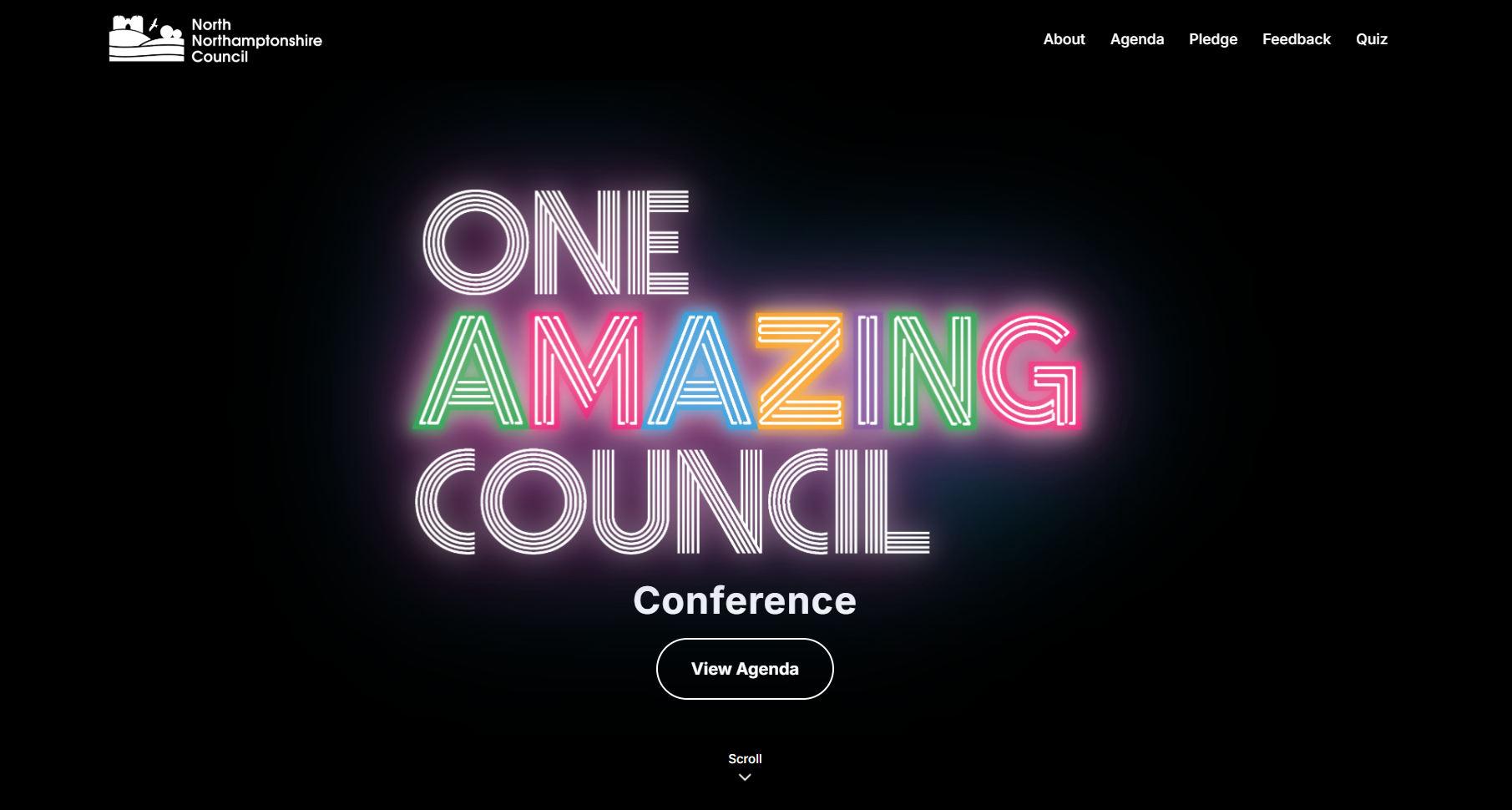
This Technology and Digital Strategy and blog site, providing a platform to share more about our work; an LGR Transform website for collaboration in the sector; and a conference site for our internal One Amazing Council event. Each had a clear, focused purpose and a short intended time to use. AI did not remove the need to think through the product; it made that thinking visible earlier in the process.
David: Mike led the first build and explored the platform's code and functionality. We then worked together to refine the framework, design and content. I led the next two simpler builds using what we had learned, while Mike reviewed the code, performance and security. That division of work was important: the tool made development more accessible, but specialist oversight remained central.
For most of the projects, we had a working proof of concept within a few hours or, at most, a day or two. We could share it early, gather feedback and make changes while stakeholders were looking at the site with us. That shortened the distance between an idea, a conversation and something tangible.
What we have learned
Speed and agility are the clearest benefits. Compared with commissioning an agency or completing every stage through a traditional enterprise build, we can develop, review and iterate very quickly. That greater control can reduce external costs and preserve development capacity for work where it is most needed.
The tools can also support learning and collaboration. A conversational interface lowers the barrier for colleagues with strengths in content, user needs or service knowledge to contribute to a build. The AI can explain how features work and suggest approaches, while a live prototype gives stakeholders something concrete to respond to.
Better inputs produce better results. Clear planning, structured prompts and agreed standards matter. Without them, the build can drift, unnecessary changes can consume credits and costs can rise. As our prompting and process have improved, our use of credits has become more efficient.
Fast does not mean unchecked
AI-generated code and content still require human judgement. During this exploration, we manually reviewed the sites, including their code, accessibility, performance and security. We have also created checks within the platform to support accessibility and security review, but these assist rather than replace professional assurance.
We are deliberately using the platform for lightweight, information-led websites rather than complex public services. Our view is that AI-assisted builders have a clear potential role for small, short-lived campaign sites and focused digital products where speed, flexibility and a distinctive design are important.
The next stage is to make the approach more sustainable: defining standards, review points and governance; understanding costs; and deciding how access could safely be extended across the team.
Mike: These tools are fun and empowering when used responsibly. The important thing is learning to use them well, not as a shortcut around good practice, but as an enabler for targeted digital solutions.
David: This pilot has shown that combining accessible AI tools with professional expertise can help us move faster, learn together and deliver value. Our task now is to turn that early promise into a safe, repeatable and cost-effective way of working.